


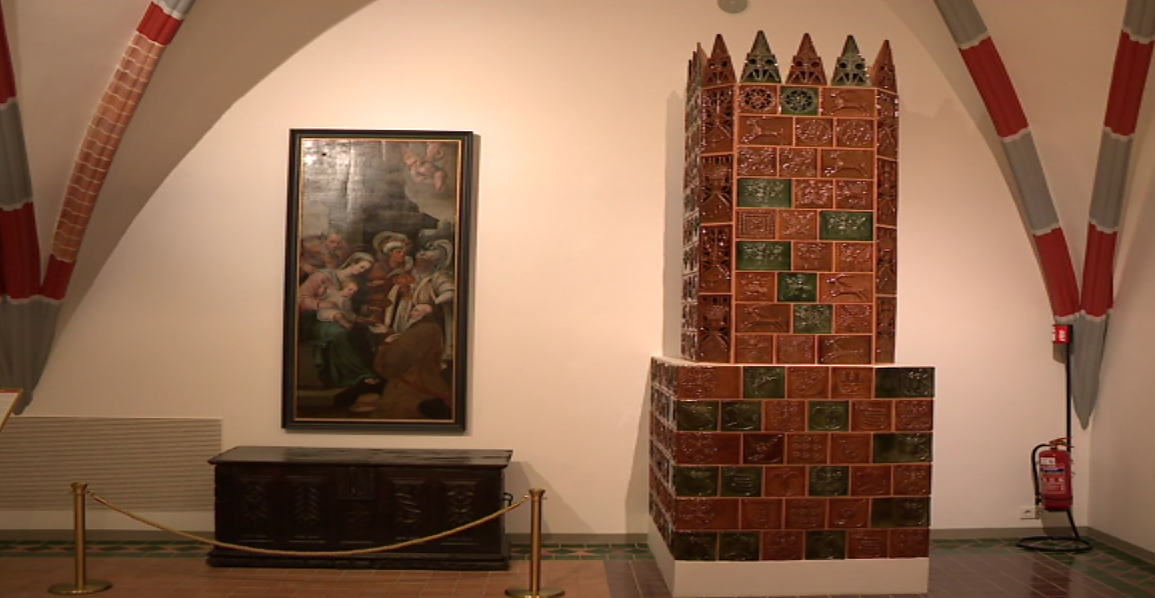
An exhibition at the Grand Dukes Palace in Vilnius takes a look at the best-surviving elements of Medieval interiors – tiled heaters.
A restored Gothic masonry heater gives an insight into how Medieval kings and noblemen kept their residences warm in what are now Austria, Hungary, Poland, and Lithuania. In the latter, little is known about Medieval interiors, but much of the surviving evidence comes from fragments of stove tiles.
In Vilnius, Gothic masonry heaters and tiles have been found mainly in the vicinity of the Grand Dukes Palace. Some of them are on display in the exhibition From a Unicorn to the Three Kings.
“The exhibition gives us an opportunity to look inside the rooms, to look at the interiors, to see what the Gothic period looked like in our castles, in the main residence of the grand dukes of Lithuania. These tiles can tell us many stories,” says Gintautas Striška, the curator of the exhibition.
The Gothic tiles feature heraldic symbols of the Grand Duchy of Lithuania, the Kingdom of Poland, of bishops and noble families, as well as scenes of everyday life, mythological and biblical stories.
Medieval depictions can be highly stylised, says Striška.
“The Three Kings (or Three Wise Men) are depicted in the Gothic way, they are not as you would imagine, three upright figures. In fact, there’s one little man with a body and legs and only two bearded heads of the other two Wise Men. But that symbolism was apparently legible in the 15th century,” says the curators.
One stove would include around 240 tiles. Enough fragments have been found on the grounds of the Grand Dukes Palace to build three.
Most of them had been discarded back when the edifice was still used, to replace the old heaters with more modern ones in the 16th century.
“The symbolism of that period is well known, even though not fully legible today: every animal, every static symbol can have a hidden meaning, and it is difficult to say now which tile could have meant what. Maybe rows of tiles or entire stoves used to tell a continuous narrative, an Old Testament story, a scene from the lives of the saints,” says Striška.
Gothic tiles were glazed in brown and green shades. It is not known where they were produced, but probably not very far from the palace.
According to archaeologist Albinas Kuncevičius, at the time the tiled stoves were not just a way of heating rooms, but also served a representational purpose – they were decorated with family heraldry or symbols to show the owner’s piety.
The exhibition From a Unicorn to the Three Kings will be open at the Palace of the Grand Dukes until the end of April.
LRT English
Newsletter
Every Friday morning.